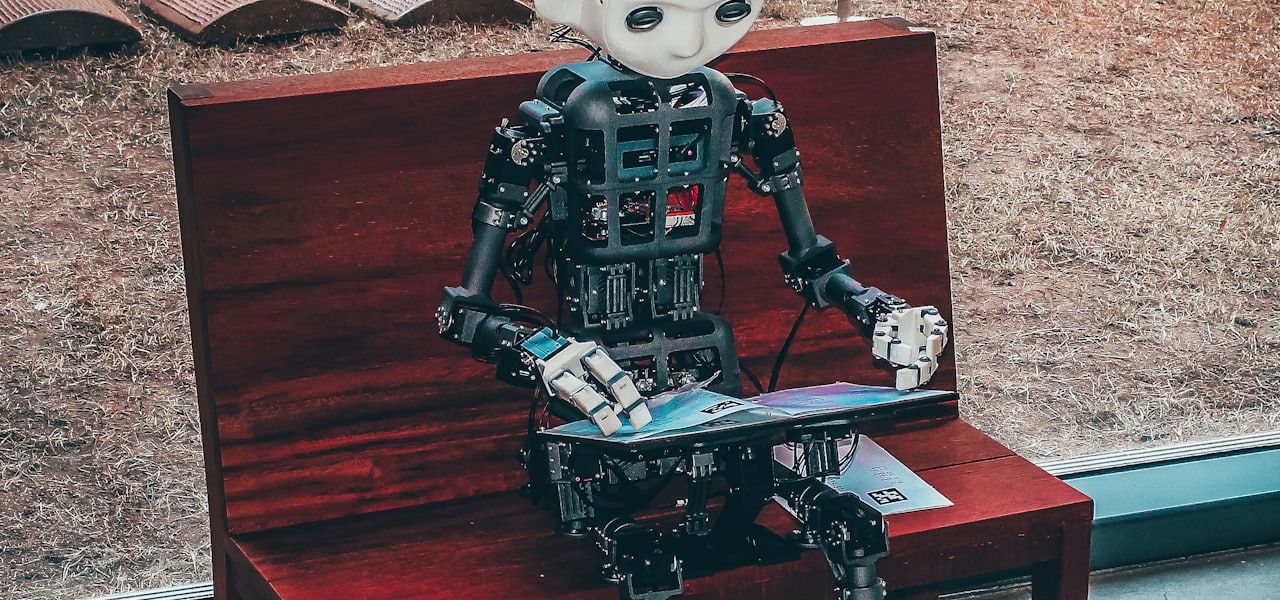
Curious about the best AI chatbot? An AI chatbot is software that uses machine learning to help you get more done — it combines speed, accuracy, and an interface that just works. Hands-on testing shows real-world results vary, so a short free trial is the smartest way to decide. Whether you are a beginner or a pro, the right AI chatbot slots into your workflow and pays for itself fast. This guide breaks down the top picks, their pros and cons, and who each one is best for.
Intel Management Engine
The Intel Management Engine (ME), also known as the Intel Manageability Engine, is an autonomous subsystem that has been incorporated in virtually all of Intel's processor chipsets since 2008. It is located in the Platform Controller Hub of modern Intel motherboards. The Intel Management Engine always runs as long as the motherboard is receiving power, even when the computer is turned off. This issue can be mitigated with the deployment of a hardware device which is able to disconnect all connections to mains power as well as all internal forms of energy storage. The Electronic Frontier Foundation and some security researchers have voiced concern that the Management Engine is a backdoor. Intel's main competitor, AMD, has incorporated the equivalent AMD Secure Technology (formally called Platform Security Processor) in virtually all of its post-2013 CPUs. == Difference from Intel AMT == The Management Engine is often confused with Intel AMT (Intel Active Management Technology). AMT runs on the ME, but is only available on processors with vPro. AMT gives device owners remote administration of their computer, such as powering it on or off, and reinstalling the operating system. However, the ME itself has been built into all Intel chipsets since 2008, not only those with AMT. While AMT can be unprovisioned by the owner, there is no official, documented way to disable the ME. == Design == The subsystem primarily consists of proprietary firmware running on a separate microprocessor that performs tasks during boot-up, while the computer is running, and while it is asleep. As long as the chipset or SoC is supplied with power (via battery or power supply), it continues to run even when the system is turned off. Intel claims the ME is required to provide full performance. Its exact workings are largely undocumented and its code is obfuscated using confidential Huffman tables stored directly in hardware, so the firmware does not contain the information necessary to decode its contents. === Hardware === Starting with ME 11 (introduced in Skylake CPUs), it is based on the Intel Quark x86-based 32-bit CPU and runs the MINIX 3 operating system. The ME firmware is stored in a partition of the SPI BIOS Flash, using the Embedded Flash File System (EFFS). Previous versions were based on an ARC core, with the Management Engine running the ThreadX RTOS. Versions 1.x to 5.x of the ME used the ARCTangent-A4 (32-bit only instructions) whereas versions 6.x to 8.x used the newer ARCompact (mixed 32- and 16-bit instruction set architecture). Starting with ME 7.1, the ARC processor could also execute signed Java applets. The ME has its own MAC and IP address for the out-of-band management interface, with direct access to the Ethernet controller; one portion of the Ethernet traffic is diverted to the ME even before reaching the host's operating system, for what support exists in various Ethernet controllers, exported and made configurable via Management Component Transport Protocol (MCTP). The ME also communicates with the host via PCI interface. Under Linux, communication between the host and the ME is done via /dev/mei or /dev/mei0. Until the release of Nehalem processors, the ME was usually embedded into the motherboard's northbridge, following the Memory Controller Hub (MCH) layout. With the newer Intel architectures (Intel 5 Series onwards), the ME is integrated into the Platform Controller Hub (PCH). === Firmware === By Intel's current terminology as of 2017, ME is one of several firmware sets for the Converged Security and Manageability Engine (CSME). Prior to AMT version 11, CSME was called Intel Management Engine BIOS Extension (Intel MEBx). Management Engine (ME) – mainstream chipsets Server Platform Services (SPS) – server chipsets and SoCs Trusted Execution Engine (TXE) – tablet/embedded/low power It was also found that the ME firmware version 11 runs MINIX 3. Management of the ME modules for provisioning inside the UEFI is done via a tool called Intel Flash Image Tool (FITC). ==== Modules ==== Active Management Technology (AMT) Intel Boot Guard (IBG) and Secure Boot Quiet System Technology (QST), formerly known as Advanced Fan Speed Control (AFSC), which provides support for acoustically optimized fan speed control, and monitoring of temperature, voltage, current and fan speed sensors that are provided in the chipset, CPU and other devices present on the motherboard. Communication with the QST firmware subsystem is documented and available through the official software development kit (SDK). Protected Audio Video Path, enforces HDCP Intel Anti-Theft Technology (AT), discontinued in 2015 Serial over LAN (SOL) Intel Platform Trust Technology (PTT), a firmware-based Trusted Platform Module (TPM) Near Field Communication, a middleware for NFC readers and vendors to access NFC cards and provide secure element access, found in later MEI versions. == The intricacies of working with Intel ME == It should also be noted that the ME region requires special cleaning and subsequent initialisation, for example, after replacing the platform hub on the motherboard. Usually, this requires an SPI programmer. There are known successful cases of this operation being performed. == Security vulnerabilities == Several weaknesses have been found in the ME. On May 1, 2017, Intel confirmed a Remote Elevation of Privilege bug (SA-00075) in its Management Technology. Every Intel platform with provisioned Intel Standard Manageability, Active Management Technology, or Small Business Technology, from Nehalem in 2008 to Kaby Lake in 2017 has a remotely exploitable security hole in the ME. Several ways to disable the ME without authorization that could allow ME's functions to be sabotaged have been found. Additional major security flaws in the ME affecting a very large number of computers incorporating ME, Trusted Execution Engine (TXE), and Server Platform Services (SPS) firmware, from Skylake in 2015 to Coffee Lake in 2017, were confirmed by Intel on November 20, 2017 (SA-00086). Unlike SA-00075, this bug is even present if AMT is absent, not provisioned or if the ME was "disabled" by any of the known unofficial methods. In July 2018, another set of vulnerabilities was disclosed (SA-00112). In September 2018, yet another vulnerability was published (SA-00125). === Ring −3 rootkit === A ring −3 rootkit was demonstrated by Invisible Things Lab for the Q35 chipset; it does not work for the later Q45 chipset as Intel implemented additional protections. The exploit worked by remapping the normally protected memory region (top 16 MB of RAM) reserved for the ME. The ME rootkit could be installed regardless of whether the AMT is present or enabled on the system, as the chipset always contains the ARC ME coprocessor. (The "−3" designation was chosen because the ME coprocessor works even when the system is in the S3 state. Thus, it was considered a layer below the System Management Mode rootkits.) For the vulnerable Q35 chipset, a keystroke logger ME-based rootkit was demonstrated by Patrick Stewin. === Zero-touch provisioning === Another security evaluation by Vassilios Ververis showed serious weaknesses in the GM45 chipset implementation. In particular, it criticized AMT for transmitting unencrypted passwords in the SMB provisioning mode when the IDE redirection and Serial over LAN features are used. It also found that the "zero touch" provisioning mode (ZTC) is still enabled even when the AMT appears to be disabled in BIOS. For about 60 euros, Ververis purchased from GoDaddy a certificate that is accepted by the ME firmware and allows remote "zero touch" provisioning of (possibly unsuspecting) machines, which broadcast their HELLO packets to would-be configuration servers. === SA-00075 (a.k.a. Silent Bob is Silent) === In May 2017, Intel confirmed that many computers with AMT have had an unpatched critical privilege escalation vulnerability (CVE-2017-5689). The vulnerability was nicknamed "Silent Bob is Silent" by the researchers who had reported it to Intel. It affects numerous laptops, desktops and servers sold by Dell, Fujitsu, Hewlett-Packard (later Hewlett Packard Enterprise and HP Inc.), Intel, Lenovo, and possibly others. Those researchers claimed that the bug affects systems made in 2010 or later. Other reports claimed the bug also affects systems made as long ago as 2008. The vulnerability was described as giving remote attackers: "full control of affected machines, including the ability to read and modify everything. It can be used to install persistent malware (possibly in firmware), and read and modify any data." === PLATINUM === In June 2017, the PLATINUM cybercrime group became notable for exploiting the serial over LAN (SOL) capabilities of AMT to perform data exfiltration of stolen documents. SOL is disabled by default and must be enabled to exploit this vulnerability. === SA-00086 === Some months after the previous bugs, and subsequent warnings from the EFF, securi
Deepfake pornography
Deepfake pornography is a form of non-consensual AI pornography created by altering existing photographs or videos using deepfake technology to modify the appearance of the participants. The use of deepfake pornography has sparked controversy because it involves the making and sharing of realistic videos featuring non-consenting individuals and is sometimes used for revenge porn. Many countries have criminalized this "new voyeurism" through legislative measures and technological solutions. == History == The term "deepfake" was coined in 2017 on a Reddit forum where users shared altered pornographic videos created using machine learning algorithms. It is a combination of the word "deep learning", which refers to the program used to create the videos, and "fake" meaning the videos are not real. Deepfake pornography was originally created on a small individual scale using a combination of machine learning algorithms, computer vision techniques, and AI software. The process began by gathering a large amount of source material (including both images and videos) of a person's face, and then using a deep learning model to train a Generative Adversarial Network to create a fake video that convincingly swaps the face of the source material onto the body of a pornographic performer. However, the production process has significantly evolved since 2018, with the advent of several public apps that have largely automated the process. While several AI "nudification" apps emerged on mainstream platforms like Google Play and the Apple App Store around 2023, major tech storefronts have since implemented stricter policies and automated detection to ban such software. Consequently, the proliferation of non-consensual deepfake pornography has largely shifted to decentralized websites, specialized online forums, and third-party messaging bot ecosystems. Deepfake pornography is sometimes confused with fake nude photography, but the two are mostly different. Fake nude photography typically uses non-sexual images and merely makes it appear that the people in them are nude. == Notable cases == Deepfake technology has been used to create non-consensual and pornographic images and videos of famous women. One of the earliest examples occurred in 2017 when a deepfake pornographic video of Gal Gadot was created by a Reddit user and quickly spread online. Since then, there have been numerous instances of similar deepfake content targeting other female celebrities, such as Emma Watson, Natalie Portman, and Scarlett Johansson. Johansson spoke publicly on the issue in December 2018, condemning the practice but also refusing legal action because she views the harassment as inevitable. === Rana Ayyub === In 2018, Rana Ayyub, an Indian investigative journalist, was the target of an online hate campaign stemming from her condemnation of the Indian government, specifically her speaking out against the rape of an eight-year-old Kashmiri girl. Ayyub was bombarded with rape and death threats, and had a doctored pornographic video of her circulated online. In a Huffington Post article, Ayyub discussed the long-lasting psychological and social effects this experience has had on her. She explained that she continued to struggle with her mental health and how the images and videos continued to resurface whenever she took a high-profile case. === Atrioc controversy === In 2023, Twitch streamer Atrioc stirred controversy when he accidentally revealed deepfake pornographic material featuring female Twitch streamers while on live. The influencer has since admitted to paying for AI generated porn, and apologized to the women and his fans. === Taylor Swift === In January 2024, AI-generated sexually explicit images of American singer Taylor Swift were posted on X (formerly Twitter), and spread to other platforms such as Facebook, Reddit and Instagram. One tweet with the images was viewed over 45 million times before being removed. A report from 404 Media found that the images appeared to have originated from a Telegram group, whose members used tools such as Microsoft Designer to generate the images, using misspellings and keyword hacks to work around Designer's content filters. After the material was posted, Swift's fans posted concert footage and images to bury the deepfake images, and reported the accounts posting the deepfakes. Searches for Swift's name were temporarily disabled on X, returning an error message instead. Graphika, a disinformation research firm, traced the creation of the images back to a 4chan community. A source close to Swift told the Daily Mail that she would be considering legal action, saying, "Whether or not legal action will be taken is being decided, but there is one thing that is clear: These fake AI-generated images are abusive, offensive, exploitative, and done without Taylor's consent and/or knowledge." The controversy drew condemnation from White House Press Secretary Karine Jean-Pierre, Microsoft CEO Satya Nadella, the Rape, Abuse & Incest National Network, and SAG-AFTRA. Several US politicians called for federal legislation against deepfake pornography. Later in the month, US senators Dick Durbin, Lindsey Graham, Amy Klobuchar and Josh Hawley introduced a bipartisan bill that would allow victims to sue individuals who produced or possessed "digital forgeries" with intent to distribute, or those who received the material knowing it was made non-consensually. === 2024 Telegram deepfake scandal === It emerged in South Korea in August 2024, that many teachers and female students were victims of deepfake images created by users who utilized AI technology. Journalist Ko Narin of The Hankyoreh uncovered the deepfake images through Telegram chats. On Telegram, group chats were created specifically for image-based sexual abuse of women, including middle and high school students, teachers, and even family members. Women with photos on social media platforms like KakaoTalk, Instagram, and Facebook are often targeted as well. Perpetrators use AI bots to generate fake images, which are then sold or widely shared, along with the victims' social media accounts, phone numbers, and KakaoTalk usernames. One Telegram group reportedly drew around 220,000 members, according to a Guardian report. Investigations revealed numerous chat groups on Telegram where users, mainly teenagers, create and share explicit deepfake images of classmates and teachers. The issue came in the wake of a troubling history of digital sex crimes, notably the notorious Nth Room case in 2019. The Korean Teachers Union estimated that more than 200 schools had been affected by these incidents. Activists called for a "national emergency" declaration to address the problem. South Korean police reported over 800 deepfake sex crime cases by the end of September 2024, a stark rise from just 156 cases in 2021, with most victims and offenders being teenagers. On September 21, 6,000 people gathered at Marronnier Park in northeastern Seoul to demand stronger legal action against deepfake crimes targeting women. On September 26, following widespread outrage over the Telegram scandal, South Korean lawmakers passed a bill criminalizing the possession or viewing of sexually explicit deepfake images and videos, imposing penalties that include prison terms and fines. Under the new law, those caught buying, saving, or watching such material could face up to three years in prison or fines up to 30 million won ($22,600). At the time the bill was proposed, creating sexually explicit deepfakes for distribution carried a maximum penalty of five years, but the new legislation would increase this to seven years, regardless of intent. By October 2024, it was estimated that "nudify" deep fake bots on Telegram were up to four million monthly users. === 2025–2026 Grok/X chatbot deepfake scandal === In December 2025, Bloomberg reported that X users found Grok would comply with unconsensual requests to digitally undress individuals, including minors, or show them performing sexually explicit acts. The majority of these prompts were targeted at women and girls. An analysis of 20,000 images generated by Grok between December 25, 2025 and January 1, 2026 showed 2% were of people in bikinis or transparent clothes and appeared to be 18 or younger, including 30 of "young or very young" women or girls. A separate analysis conducted over 24 hours from January 5 to 6 calculated that users had Grok create 6,700 sexually suggestive or nudified images per hour. xAI responded to requests for comment from media organizations with the automated reply, "Legacy Media Lies". The bot's image generation sparked an international backlash and calls for legal or regulatory action from officials in the European Union, United Kingdom, Poland, France, India, Malaysia, and Brazil. === Fernandes–Ulmen case === German TV presenter Collien Fernandes, filed a complaint against her ex-husband, actor Christian Ulmen, for several accusation including, ident
Project Debater
Project Debater is an IBM artificial intelligence project, designed to participate in a full live debate with expert human debaters. It follows on from the Watson project which played Jeopardy! == Development == Project Debater was developed at IBM's lab in Haifa, Israel. The project was proposed by Noam Slonim in 2011 as the IBM Research next Grand Challenge, following Deep Blue and the victory of Watson in Jeopardy! It was exposed for the first time in a closed media event at June 18, 2018, in San Francisco, under the leadership of Ranit Aharonov and Slonim, both from the IBM Research lab in Haifa, Israel. The AI technology debated two human debaters, Noa Ovadia, who was the 2016 Israeli debate champion and Dan Zafrir. The two debated on the topics "We should subsidize space exploration" and "Should we increase the use of telemedicine." A demonstration of Project Debater also aired on the Discovery Channel in June 2018 debating the question of whether sports gambling should be legalized. == Live Debate == On February 11, 2019, Project Debater was revealed to the world in a live debate in San Francisco. Nonpartisan media group Intelligence Squared U.S. Debates hosted the debate which was moderated by journalist John Donvan. The debate took place between Project Debater and Harish Natarajan, who holds the world record in number of debate competition victories. The motion was “We should subsidize preschools.” == That's Debatable Television Show == Project Debater was featured in a television series called “That’s Debatable” presented by Intelligence Squared U.S. Debates and Bloomberg Media. For each episode of “That’s Debatable,” Project Debater provided insight into three distinct debate topics on the redistribution of wealth, modern monetary theory, and a US-China space race. More than 5,000 arguments were submitted online from around the world across the three topics, which were then analyzed and distilled into key points that were highlighted on the television show and discussed by human debaters. == Artificial Intelligence Capabilities == To develop Project Debater, the IBM Research team had to endow the system with the following AI capabilities: Data-driven speech writing and delivery: Project Debater is the first demonstration of a computer that can digest massive corpora, and given a short description of a controversial topic, write a well-structured speech, and deliver it with clarity and purpose, while even incorporating humor where appropriate. Listening comprehension: the ability to identify the key concepts and claims hidden within long continuous spoken language. Four minutes of persuasive speech: the guarantee of producing four minutes of persuasive speech. Modeling human dilemmas: modeling the world of human controversy and dilemmas in a unique knowledge representation, enabling the system to suggest principled arguments as needed. An article on the project was published in Nature in March 2021.
Monkey and banana problem
The monkey and banana problem is a famous toy problem in artificial intelligence, particularly in logic programming and planning. It has been framed as: A monkey is in a room containing a box and a bunch of bananas. The bananas are hanging from the ceiling out of reach of the monkey. How can the monkey obtain the bananas? The situation is used as a toy problem for computer science and can be solved with an expert system such as CLIPS. The example set of rules that CLIPS provides is somewhat fragile, in that, naive changes to the rulebase that might seem to a human of average intelligence to make common sense can cause the engine to fail to get the monkey to reach the banana. Other examples exist using Rules Based System (RBS), including a project implemented in Python.
Chasys Photo
Chasys Photo (previously called Chasys Draw Artist, then Chasys Draw IES) is a suite of applications including a layer-based raster graphics editor with adjustment layers, linked layers, timeline and frame-based animation, icon editing, image stacking and comprehensive plug-in support (Chasys Draw IES Artist), a fast multi-threaded image file converter (Chasys Draw IES Converter) and a fast image viewer (Chasys Draw IES Viewer), with RAW image support in all components. It supports the native file formats of several competitors including Adobe Photoshop, Affinity Photo, Corel Photo-Paint, GIMP, Krita, Paint.NET and PaintShop Pro, and the whole suite is designed to make effective use of multi-core processors, touch-screens and pen-input devices. The software is developed by John Paul Chacha in Nairobi, Kenya. Chasys Draw IES is currently released as freeware, and is available for computers running Microsoft Windows operating systems. It is available in three distributions: the standard distro, a portable version and a Microsoft Store version. The suite is coded in a blend of C, C++ and assembly language. It runs on x86 processors and supports the MMX, SSE, SSE2, S-SSE3, and SSE4.1 instruction sets. == History == Chasys Draw is a project that was started in November 2001 by John Paul Chacha, mostly as a hobby than anything else. The original Chasys Draw was a rather simple bitmap editor done in Visual Basic, a lot like MS Paint save for its ability to do gradients. This application underwent many changes, eventually leading up to Chasys Draw 5. This was the first version to have its own native format, referred to simply as CD5. Major updates to the graphics code in May 2002 resulted in Chasys Draw DTFx (Direct Tool eFfects). The new graphics code being referred to here was actually a miniature bitmap abstraction engine that allowed for fast per-pixel operations and direct image buffer access (much as the DIB engine does for GDI). The engine was named JpDRAW. This version was also done in VB, but was much faster than all the previous versions. The new graphics code allowed for more tools to be implemented than was ever possible before. Later on in 2002, the developer decided to completely abandon VB as a programming platform and moved all the code to C/C++. The move to C/C++ allowed the development of a full-fledged graphics engine which was named JpDRAW2. Chasys was renamed to Chasys Draw Artist, and the CD5 image format was also updated to reflect the new features. By coincidence, the module that implemented the file format was the fifth module to be added, so the format was called Chasys Draw module 5, retaining the .cd5 file extension. First public release In April 2004, Chasys Draw Artist was released to the public via the internet for the first time (version 1.27). The release was done via betanews). In 2005, Chasys Draw underwent major user interface changes as well as internal changes. By December of that year, the project had reached version 1.63. This was the first version to introduce advanced features such as anti-aliasing. It was also the first version with full support for alpha channels. The CD5 image format was also upgraded to version 2, adding advanced compression, full alpha channels, encryption and metadata. Version 1.63 was the first version to win an IEEE (Kenya chapter) award in ICT. The "chazy-glass" interface, from which the all later versions' user interfaces borrowed, was introduced in version 1.80. Chasys Draw Artist adopted photo editing features in version 2.01. Comprehensive tutorials were added and many features were re-designed to make them easier to use. Multi-threading was introduced to accelerate some tasks, such as the improved auto-save engine. Utilities such as a converter and browser were added. Version 2.43 of Chasys Draw Artist was quietly released to the public in late 2007 without any announcements. It featured many fixes to the formal version 2.42, as well as many new features. The quiet release was due to a decision to re-build Chasys Draw Artist from scratch, while still continuing support for the old architecture. An experimental version 2.45 was released only to beta-testers for the purpose of testing new technologies that would be included in the new architecture and was officially withdrawn in May 2008. During the time when the versions 2.43~2.45 were being released, work was underway to create a new layer-based Chasys Draw, which was released as Chasys Draw IES (Image Editing Suite), with the initial version number 2.50. A new multi-layer tag-based image format was created to support layering and blending modes; this was named CD5 v3. The next version introduced animation and multi-resolution support as editing modes, and the next one brought in an unlimited undo engine, new plug-ins and several internal fixes. Further development led to the introduction of super-resolution and image stacking, support for video and video capture, Anti-aliasing, metadata save and restore, a "Pen and Path" tool, physical measurement specification, and a video sequence composer engine. The user interface was enhanced with adaptive scrolling and the auto-save engine was optimized. Some memory management was added for machines with low RAM. By version 2.60, Chasys Draw IES was capable of loading Photoshop's PSD files, as well as load and save JPEG 2000. This version also had shell integration with thumbnails and application-level support for multi-monitor display setups. Metadata was extended to support save, restore and scaling for text formatting and path data. There was also a new palette with exchangeable swatches, loadable from all kinds of palette files. A slicing tool for web and user interface design was also included. A C++ code module output for inline image generation was added, as was a constrained recolor brush. The concept of a "fully anti-aliased work-flow" was introduced in version 2.62, in which all drawing and selection tools were anti-aliased by default. Support for Photoshop plug-ins using Adobe's 8bf format was added in version 2.66, allowing users to utilize thousands of free plug-ins available online. Equivalents for the Pantone palettes (PMS 100 to 814-2x) were added, and the "Just-in-Time" memory compressor significantly reduced the editor's memory requirements. First freeware release Chasys Draw IES went freeware on 6 June 2009. With the coming of the freeware IES, two blending modes (Hue and Chroma) were added. Textures were improved to allow multiple layer-based textures. The TextArt G3 engine was enhanced with LINK metadata, and alpha shift was improved. IES 2.72 added the Luma Wand tool, fixed PNG and TIFF transparency issues, and fixed Smart-Paste transparency. IES 2.74 introduced alpha protection, and 2.75 followed with a new adjustments engine that faced out many effects implemented by the effects engine. The adjustments engine was designed to appeal to experienced image editors. IES 2.76 introduced a new transform engine and the Resizer for IES plug-in supporting multi-core and 18 scaling methods, including customizable windowed Sinc interpolation. IES 2.77 added Greyscale with Tint adjustment, separated the Lock and Click-Thru layer properties, extended the Cloning Brush with three options (this, below and composite) and also extended the Color Picker with multiple point sampling. IES 3.01 brought a new look and many breakthrough tools to the suite. It was geared toward touch and was fully compatible with Windows 7. The toolbox was reorganized, with some tools being grouped and new ones added. Some message boxes were replaced with a new popup system, and the working of the workspace was changed to use a back-blitter, which enabled the addition of new blending modes, Screen and Mask. The printing interface was modified and given accurate proofing. Alpha Function Adjustment was added and a new Anti-Quantization Engine included for all adjustments to remove the need for 16 bits per channel editing. An internal clipboard was created to cater for copying images that are too large for the Windows clipboard, and translucency full-page gradients added. Some new tutorials were added and keyboard shortcuts made configurable. IES 3.05 brought the power of custom full-page gradients to the suite, supporting .ggr, .grd and .gra gradients. New gradient styles were included, as was support for Adobe color tables (.act), palette previewing, point color editing and a highly improved TextArt engine. Digital lightroom IES 3.11 was introduced on 14 December 2009. It was done on a new development base and added a new application, raw-Input. This was a RAW image format processor based on dcraw. This application allowed the use of Chasys Draw IES in processing digital negatives, which are popular with professional photographers. Chasys Draw IES 3.24 was released with a re-designed user interface, powered by a higher performance graphics core and better memory management. A history palette w
Roborace
Roborace was a competition with autonomously driving, electrically powered vehicles. Founded in 2015 by Denis Sverdlov, it aimed to be the first global championship for autonomous cars. From 2017 to 2019, the official CEO was 2016–17 Formula E champion, Lucas Di Grassi, who later became a member of Roborace’s supervisory board. The series tested their technology and race formats at FIA Formula E Championship events during 2016–2018. In 2019 Roborace organized Season Alpha, which consisted of 4 trial racing events with several independent teams competing against each other for the first time. In 2020–21 Roborace held Season Beta with 7 competing teams. All teams utilized the same chassis and powertrain, but they had to develop their own real-time computing algorithms and artificial intelligence technologies. In May 2022, Arrival, the owner of Roborace, confirmed that they were no longer continuing the Roborace programme, but that they were hoping to find alternative funding. In February 2024, after getting its stock delisted from the Nasdaq, Arrival's UK division entered administration, with future plans of a sale of Arrival and all of its affiliated assets. == Cars == === Robocar === The world's first purpose-built autonomous racing car, Robocar, was designed by Daniel Simon, who previously worked on vehicles for movies such as Tron: Legacy and Oblivion, as well as designing the livery for the 2011 HRT Formula One car. Michelin is the official tyre supplier, and the internal computing processors (Drive PX 2) are Nvidia. The chassis itself is shaped like a teardrop, improving aerodynamic efficiency. The car weighs around 1350 kg and is 4.8 metres (16 ft) long and 2 metres (6.6 ft) wide. It has four electric motors, each with a power of 135 kW producing over 500 hp combined, and utilizes a 840V battery. For navigation, it relies on a mixture of optical systems, radars, lidars and ultrasonic sensors. The vehicle has been demonstrated at speeds of almost 300 km/h (190 mph). === DevBot === Development of the Robocar started in early 2016, with a first outing of a test vehicle, the so-called DevBot, following in the summer of the same year. The test car consisted of the same internal units (battery, motor, electronics) used in the Robocar, but were placed in the chassis of a Ginetta LMP3 car without an engine cover in order to provide better cooling and access. DevBot saw its first public outing at the Formula E pre-season tests in Donington Park in August 2016. After battery issues in Hong Kong caused the development team to abandon their demonstration run, the DevBot successfully drove twelve laps around the Moulay El Hassan Formula E circuit in Marrakesh. Other test tracks included Michelin's testing ground in Ladoux and the Silverstone Stowe Circuit. During testing ahead of the 2017 Buenos Aires ePrix, two DevBot cars raced against each other autonomously, resulting in one of the vehicles crashing on a corner. During the 2017–18 Formula E season, Roborace pitched pro-drifter Ryan Tuerck against a DevBot at the Rome ePrix. At the Berlin ePrix, Roborace held the Human + Machine Challenge, the first race for combined teams of human drivers and AIs using a pair of Devbots. === DevBot 2.0 === An upgraded version of DevBot was announced in late 2018, and after private testing made its public debut in 2019 at the inaugural Season Alpha event. DevBot 2.0 uses the same technology as both Robocar and DevBot, with the main changes being a conversion to being driven on the rear axle only, a lower position for the driver for safety reasons and a bespoke composite bodywork. == Seasons == === Testing === ==== 2016–17 Formula E season ==== Roborace appeared at a number of Formula E events during the 2016–17 Formula E season. However, in this period only test drives with two different DevBots took place. Within the framework of the 2017 Buenos Aires ePrix both DevBot vehicles drove against each other on a race track for the first time. There were also DevBot demonstrations at the 2016 Marrakesh ePrix, 2017 Berlin ePrix, 2017 New York City ePrix and 2017 Montreal ePrix. At the 2017 Paris ePrix, the developers also let a Robocar onto the track for the first time, even though the vehicle only drove the track at walking speed. ==== 2017–18 Formula E season ==== At the start of the 2017/18 Formula E season, the Roborace developers once again tested the DevBot during a public time trial between the Roborace CI and the TV presenter Nicki Shields at the 2017 Hong Kong ePrix. As part of a similar time trial at the 2018 Rome ePrix, drift professional Ryan Tuerck also tested the DevBot. The Human + Machine Challenge was created for the Formula E race on the Berlin ePrix. A team of doctoral students from the Technical University of Munich (TUM) and the University of Pisa programmed the software for the Devbot to drive autonomously around the circuit in Berlin. Afterwards both teams in combination with a human driver competed in a public time trial. The vehicle of the team of the Technical University of Munich finished the Human + Machine Challenge with an average lap time of 91.59 seconds, almost four seconds faster than that of the University of Pisa with 95.36 seconds and thus won the Challenge. At the Goodwood Festival of Speed, Robocar became the first ever fully autonomous race car to complete the Goodwood Hill Climb. The vehicle completed the first official autonomous run on 13 July 2018 within the framework of the event. === Season Alpha (2019) === Season Alpha took place at various locations in Europe and North America with the aim of testing several competition formats using the new DevBot 2.0. The first event was held at the Circuito Monteblanco in Spain, and featured the first race between two fully autonomous cars. The events were not broadcast live, instead short clips on YouTube were released. Two teams were competing: Arrival and the Technical University of Munich. On 7 July 2019, the Roborace DevBot 2.0 car set the first ever autonomous official timed run at Goodwood Festival of Speed, with a time of 66.96 s and a top speed of 162.8 km/h (101.2 mph). This is currently the record for autonomous vehicles. Roborace also set the Guinness World Record for having the fastest autonomous car in the world. The Robocar reached a speed of 282.42 km/h (175.49 mph). === Season Beta (2020–21) === The second testing season took place at various locations between September 2020 and October 2021, featuring 16 races and involving mixed reality elements dubbed "Roborace Metaverse", which is based on Roborace's patented technology. The program of Season Beta competitions has gradually complicating rules arranged in a progression of so-called missions. Each mission consists of two racing rounds — one round per day. A mission plan issued by Roborace for each mission defines its objectives, rules, and point-scoring system. The key objective of Season Beta is to come to the point when the majority of competing teams have developed sufficient capability for wheel-to-wheel racing in Season 1. There were 7 teams competing in Season Beta: Arrival Racing (UK/Russia), Autonomous Racing Graz (Austria), MIT Driverless (United States), Acronis SIT (Switzerland), University of Pisa (Italy), PoliMOVE (Italy), CMU (United States).